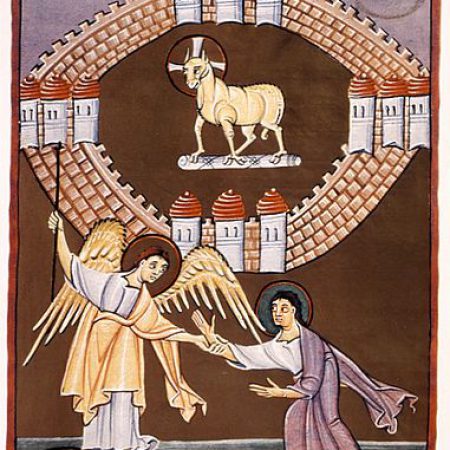
The Revelation’s surprising image of the absence of church buildings in the fulfilled holy city is a helpful reminder that they have always been a risky concession and that their dangers need to be carefully avoided.

The Revelation’s surprising image of the absence of church buildings in the fulfilled holy city is a helpful reminder that they have always been a risky concession and that their dangers need to be carefully avoided.
When we approach God’s way of life and the Sabbath not as punishment, but as gift, the experience becomes a chance to rest from work and from striving; and to allow space for God through contemplation and re-creation and play.
Our readiness to welcome and celebrate Christ is integral to his becoming present and active among us.
Christ is present to us in love, unity and reconciliation, and thus these are essential to our worship.
God approaches us in an eager desire for communion, so our task is not to strive for communion, but simply to open ourselves to receive it.
God calls us to live exuberantly, generously reflecting the good things God has done and becoming model citizens in the reign of God.
United with Christ in baptism we cross the threshold from death to life, and in Eucharist we continue to touch the scars which nourish our faith and inspire our worship.
True worship, which honours and pleases God, is a seamless combination of ritual praise and a life lived in doing good for others.
But the call is to be “Fair Dinkum” with each other, to be open and trust who we are to this community.
Christ is so present we loose the ability to see him. We need to worship to recover our sight.
If we can lose ourselves in the worship of Christ, then Christ will come to fill our emptied egos with his own self which now dances in the freedom of God.
The experience of resurrection results in joy and mission.
The Advent season is a gift that illumines our present with light from our promised goal, to shape us as a people of patient and vigilant faithfulness.
There is no such thing as a ritual-free space, and performed well or performed badly, rituals change things, change people’s lives.
The resurrection of Jesus is about the in-breaking of something which is so new, so different, so unheard of, that it changes things so entirely that we will never again become captive to all that is predictable, or ‘necessary,’ or ‘fated’.
Our liturgical expression of faith can nurture but not substitute for putting our faith into action.
Our worship is a part of a cosmic liturgy of praise to the One who was slaughtered in reconciling a suffering universe to God.

The sexy bits of the Bible point to an understanding of the sacramental nature of sexual intimacy.
The measure of the value of our worship is the measure of the transformation of our lives.
What God has done and is doing is cause for celebration.