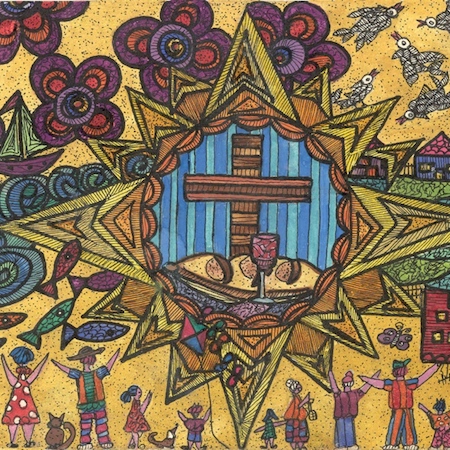
En Cristo somos uno con toda la carne y la sangre, y por lo tanto nuestra lucha no es contra ningunas personas, sino contra los espíritus y los principados y los potestades que dividirían a la gente y les harían enemigos.

En Cristo somos uno con toda la carne y la sangre, y por lo tanto nuestra lucha no es contra ningunas personas, sino contra los espíritus y los principados y los potestades que dividirían a la gente y les harían enemigos.
Building impressive buildings can be about a desire to monopolise and contain God, whereas God wants us to break down any walls that divide and exclude anyone.
A sermon in response to a broken relationship in the church
We are prepared to sacrifice and kill in the name of our God, but God is willing to be sacrificed and be killed to save us, even when we were enemies.

God has become flesh so that we might know God and realise our own destiny in God in the world.
In our desire to see mercy and compassion expressed for the needy, we must beware of falling into desiring the exact opposite for those who have not shown mercy and compassion.
Christ is present to us in love, unity and reconciliation, and thus these are essential to our worship.
God and religion misunderstood can be the cause of hostility, division and violence, but the God made known to us in Jesus is a God of grace who generously gives us life, freedom and reconciliation.
Jesus calls us to give up the illusion that we own God’s blessing, invite others in, and be despised for doing so, giving up our privileges to build a world that all can share.
We are to witness to this incredible, unbelievable, but very real truth: that in God’s reality, love crosses every divide, even the chasm of death.
How might the biblical witness and the Eucharistic meal set before us shed light on our sense of vocation, on the offerings we seek to bring, individually and collectively?
God has created us for relationships, and any values or priorities that are willing to sacrifice relationship for something else will cripple us.
When we follow Christ in being pain-bearers, we are participating in the reconciliation of the world.
It is human nature to think that our ways are God’s ways, and so to shun those whose ways seem alien or disgusting to us, but Jesus calls us to recognise God at work in others, however different.
In Christ we are one with all flesh and blood, and so our struggle is not against any other people, but against the spirits and powers and forces which would divide people and make them enemies.
Jesus breaks down the barriers that divide us into pure and impure and removes the cause for the fear that marginalises people.
The Church is one body, sent into the world to live the life Jesus has begun, a life of love, reconciliation and mercy.
With Jesus we are baptised into a Spirit-inspired costly life of living the new culture of scandalous reconciliation.
Though we get caught up in violent rivalries like Herod, God breaks through with the promise of a new kingdom where all are honoured.
Are we, individually and together, focused on the things that we can be doing, that will enable us to embrace and nurture the growth of Christ’s values, withstanding opposition to them?