Jesus’s invitation is radically open and inclusive, and we need to guard carefully against our own culturally conditioned instincts to start narrowing and policing it.

An Open Table where Love knows no borders
An Open Table where Love knows no borders
Sermons on Grace (Page 7)

Good gossip, listening in love to each other’s stories and seeking the presence of God, helps us to build connection and community and to grow in love.

En Cristo somos uno con toda la carne y la sangre, y por lo tanto nuestra lucha no es contra ningunas personas, sino contra los espíritus y los principados y los potestades que dividirían a la gente y les harían enemigos.
Jesus rejects the opportunity to fulfil our hopes and expectations in order that he might give us more than we thought possible.
Despite our often minimal vision for ourselves, and our feeling of not being important to God, Jesus Christ is committed to bringing us to the fullness of life and wholeness.
A sermon in response to a broken relationship in the church
Because we really don’t have the whole truth, the Spirit will be heard only when we are together, listening to one another in love.
With every step we take towards God’s economy, we will become more powerful in our witness to God’s saving action and love for the world, and be filled ever more deeply with God’s good grace.
When we approach God’s way of life and the Sabbath not as punishment, but as gift, the experience becomes a chance to rest from work and from striving; and to allow space for God through contemplation and re-creation and play.
In our desire to see mercy and compassion expressed for the needy, we must beware of falling into desiring the exact opposite for those who have not shown mercy and compassion.
God’s grace is so extravagant that it will offend us as long as we are measuring our worth in comparison to others.
God does not judge people’s capacity to respond and focus love and care only on the productive, but gives gifts with wanton freedom and extravagance and calls us to do the same.
Trying to establish our own righteousness burdens us with divisiveness and hostility, but Jesus offers us rest and freedom.
God and religion misunderstood can be the cause of hostility, division and violence, but the God made known to us in Jesus is a God of grace who generously gives us life, freedom and reconciliation.
God’s refining work is done not through judgement and punishment, but through the transforming power of love.
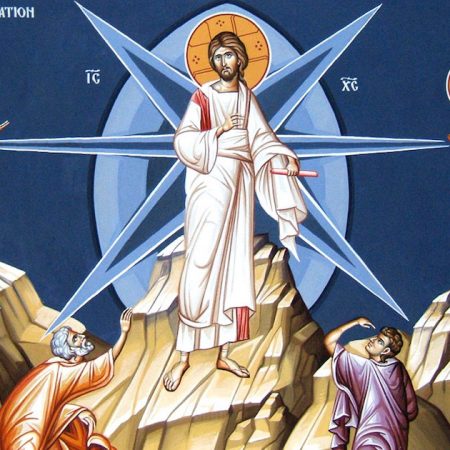
The stories of Moses, Elijah and Jesus on various mountain tops reveals a process of God’s self-revelation as the one who loves us and suffers for us.
The “things” we so readily put our trust in, or find our identity in, will all fall, and only God’s love and care for us will remain.
Forgiving the way Jesus does will always be seen as not just disreputable, but even dangerous and criminal.
Jesus Christ is the same yesterday and today and forever.
In order for God to come to us as the healer and the liberator of souls, we must be prepared to let go of every religious pretension, every cultural certainty, every economic doctrine, every aspirational rule.