Faith is a gift created in us as Jesus shows us that the pathway of courageous love and self-sacrifice is not impossible to walk.

An Open Table where Love knows no borders
An Open Table where Love knows no borders
Sermons on Matthew (Page 7)
There is nothing we can do to earn God’s presence or God’s blessing or God’s love, but when we let down our defences, when we give up striving, when we are vulnerable, then who knows what might happen?
God does not judge people’s capacity to respond and focus love and care only on the productive, but gives gifts with wanton freedom and extravagance and calls us to do the same.
Trying to establish our own righteousness burdens us with divisiveness and hostility, but Jesus offers us rest and freedom.
God and religion misunderstood can be the cause of hostility, division and violence, but the God made known to us in Jesus is a God of grace who generously gives us life, freedom and reconciliation.
Jesus calls us to give up the illusion that we own God’s blessing, invite others in, and be despised for doing so, giving up our privileges to build a world that all can share.
The message of Easter was that the disciples would find Jesus – not at the empty tomb – but going ahead of them into Galilee – on the mission field.
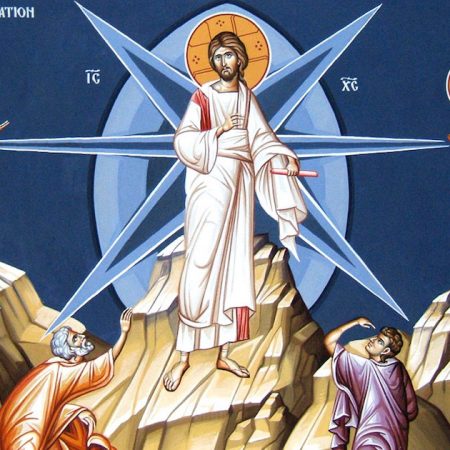
The stories of Moses, Elijah and Jesus on various mountain tops reveals a process of God’s self-revelation as the one who loves us and suffers for us.
Jesus calls us to model ourselves on him to embrace a new pattern of full humanity rather than just constrain the worst excesses of an old failed humanity.
The righteousness give to us in Christ, and which we grow into in our following of him, fulfils and exceeds the trajectory set by the biblical law and prophets.
Jesus honours, commends and models a set of attitudes, or stances toward the world, which can and will change the world, but embracing them is no small challenge.
The “fishing for people” to which we are called is not about being pushy and manipulative marketers, but being open and generous in our sharing of the light that has brought us life and healing.
The ‘death of the self’ in baptism, modelled in Jesus, enables us to live openly and generously instead of fearfully and defensively.
How might the biblical witness and the Eucharistic meal set before us shed light on our sense of vocation, on the offerings we seek to bring, individually and collectively?
The Christmas story includes a message of God’s solidarity with and care for children and families who live in fear and who flee to seek refuge. We corrupt the message if we make it about our children and not all children.
The Christ child is the light who enlightens the world and as his love takes root in our hearts and lives, it causes us to light up the darkness.
When God is moving to do something new among us, it almost always seems scandalous, immoral and offensive to many, and is just as likely to involve those who are regarded as morally suspect.
Jesus probably won’t meet our expectations, but will instead set out to convert our expectations and lead us into a new world that exceeds anything we could have expected.
Though we get caught up in violent rivalries like Herod, God breaks through with the promise of a new kingdom where all are honoured.
Jesus calls us to love and care for the world’s victims, and to refuse to participate in making more of them (even from among the victimisers).